






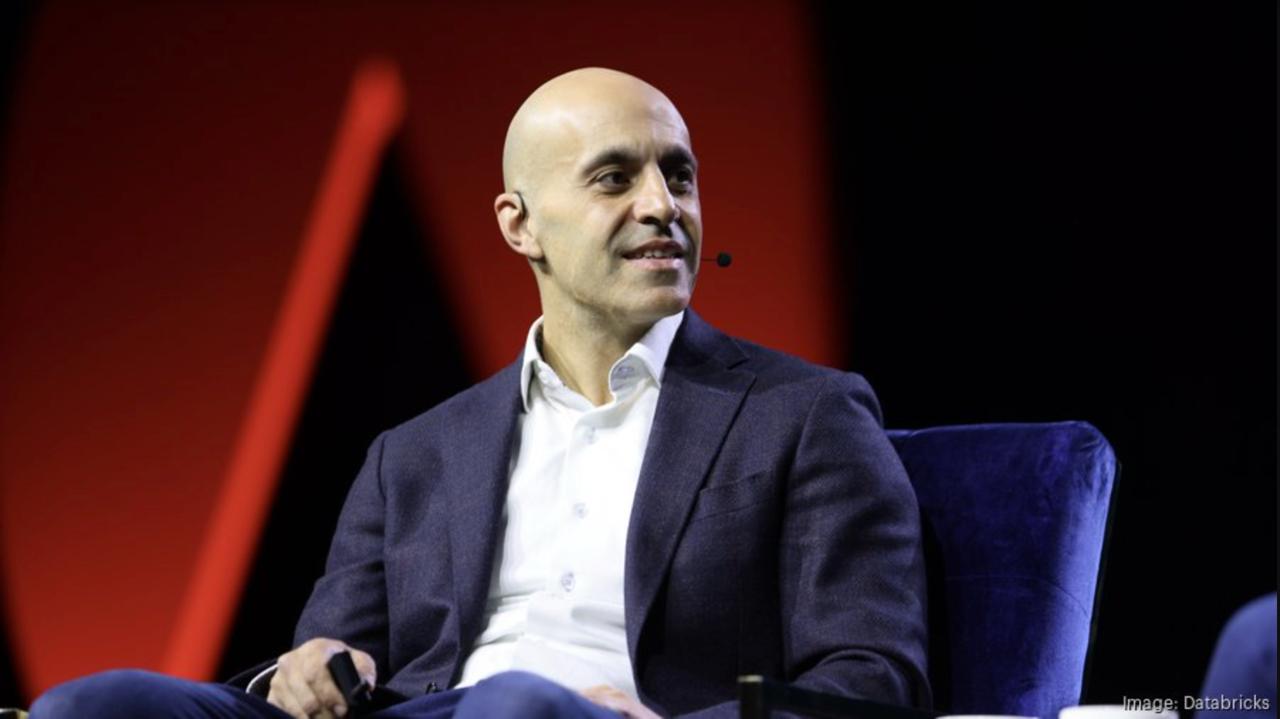
Databricks, the unified Data and AI company, has announced a landmark funding achievement, raising a Series L investment of over $4 billion. This colossal round values the company at an eye-watering $134 billion and solidifies its position as a dominant force at the intersection of enterprise data and generative AI.
The funding arrives amid a period of unprecedented financial momentum. Databricks has surpassed a $4.8 billion revenue run-rate, demonstrating robust growth of over 55% year-over-year. Critically, the company reported positive free cash flow over the last 12 months, achieving growth without sacrificing profitability. This financial success is underscored by the company’s Data Warehousing business and its dedicated AI products, both of which have separately crossed the $1 billion revenue run-rate mark.
Fueling the Data Intelligent Application Era
The parallel rise of generative AI and new coding paradigms is rapidly pushing enterprises toward building “Data Intelligent Applications”—applications that are natively powered by high-quality data. Databricks is earmarking the new capital to accelerate product development across three strategic platforms designed to serve this demand:
Lakebase: The firm’s next-generation, serverless Postgres database purpose-built for the AI era.
Databricks Apps: A new user experience layer enabling customers to quickly build and deploy data and AI applications with world-class speed and security.
Agent Bricks: A framework for building and scaling high-quality, governed multi-agent systems directly on customer data.
Ali Ghodsi, co-founder and CEO of Databricks, articulated the vision for the future: “Enterprises are rapidly reimagining how they build intelligent applications, and the convergence of generative AI with new coding paradigms is opening the door to entirely new workloads. By anchoring transactional data in Lakebase, delivering intuitive experiences through Databricks Apps, and enabling advanced multi-agent systems with Agent Bricks, we’re giving customers a unified foundation to build trusted, high-performance Data Intelligent Applications at scale.”
A Blue-Chip Investor Roster
The Series L round was led by Insight Partners, Fidelity Management & Research Company, and J.P. Morgan Asset Management. The massive syndicate of investors also included significant participation from top-tier firms such as Andreessen Horowitz, BlackRock, Blackstone, Coatue, GIC, MGX, NEA, Ontario Teachers Pension Plan, Robinhood Ventures, accounts advised by T. Rowe Price Associates, Inc., Temasek, Thrive Capital, and Winslow Capital.
John Wolff, Managing Director at Insight Partners, expressed his firm’s conviction: “Our continued investment in Databricks reflects our deep conviction in their extraordinary momentum today and their ambitious vision for the future. Databricks leads the way in turning AI innovation into enterprise impact.”
📰 Editorial View: The Unification of Data and AI
The latest funding round for Databricks is more than just a capital raise; it is a profound validation of the “Data Intelligence Platform” thesis and the final, necessary convergence of the data warehouse and AI stack. For years, enterprises struggled with fractured architectures, separating their analytical data (warehouses) from their unstructured and messy data (lakes), creating governance nightmares and slowing AI adoption. Databricks’s solution, the Lakehouse, sought to unify this, and the market has responded dramatically, evidenced by the Data Warehousing product hitting a $1 billion revenue run-rate in under four years.
However, the true significance of this Series L round lies in the firm’s strategic focus on the next frontier: the operationalization of AI. With the introduction of Lakebase, Databricks Apps, and especially Agent Bricks, Databricks is evolving from a data infrastructure provider into the essential control layer for the entire AI application lifecycle. Agent Bricks is particularly forward-thinking, providing the governed, measurable, and auditable framework necessary for enterprises to confidently deploy complex, multi-agent AI systems. This transition is not about incremental improvement; it’s about providing the full stack necessary for businesses to shift from merely using AI to building foundational, competitive AI systems on their own proprietary data. This cohesive, end-to-end vision—from data storage to application delivery—positions Databricks to capture a massive share of the corporate IT spend as AI moves from experimentation to core business strategy.
If you need further assistance or have any corrections, please reach out to editor@thetimesmag.com.