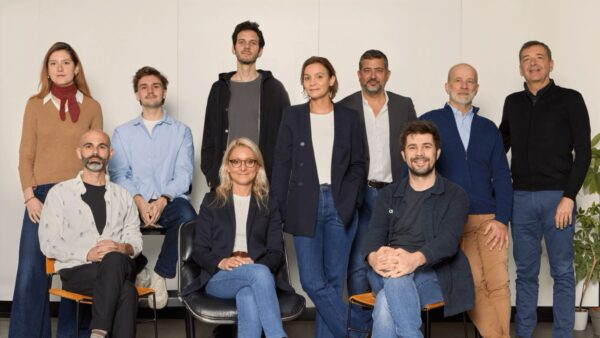
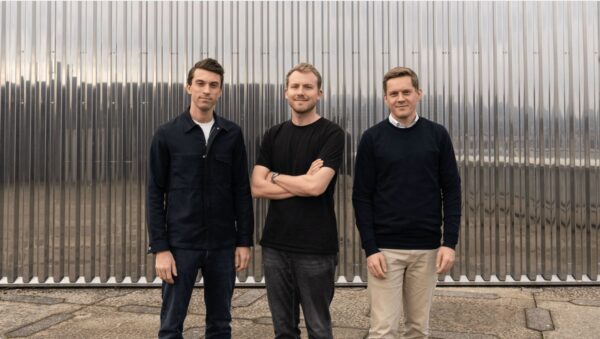
Chai Discovery, an artificial intelligence–driven biotechnology company focused on molecular design, has announced a $130 million Series B funding round, marking a major milestone in its effort to reengineer how drugs are discovered and developed. The financing values Chai Discovery at $1.3 billion and was co-led by Oak HC/FT and General Catalyst. The latest round follows a period of rapid technical advancement for Chai Discovery, including the release of models capable of designing molecules with real-world “developability” characteristics—an area where traditional drug discovery methods have often fallen short. These advances enable the company to address so-called hard-to-drug biological targets that have long resisted conventional approaches.
Just months earlier, Chai Discovery raised a $70 million Series A and unveiled Chai 2, described as the first zero-shot generative platform to achieve double-digit experimental success rates in de novo antibody design—representing a dramatic leap over prior computational techniques.
“We’re standing on the precipice of a new era for the biopharmaceutical industry,” said Josh Meier, co-founder and CEO of Chai Discovery. “What once looked like five-year problems are now being solved in weeks. Our models can design molecules with properties expected of real drugs and address targets that were previously out of reach.”
The Series B round attracted a broad syndicate of technology and life-science investors, including Thrive Capital, OpenAI, Dimension, Menlo Ventures, Lachy Groom, Yosemite, Neo, and SV Angel. New investors Emerson Collective and Glade Brook also joined the round. General Catalyst Managing Director Elena Viboch highlighted the broader implications of the company’s work, noting that biology is shifting from an empirical discipline toward an engineered one. According to Viboch, Chai Discovery sits at the forefront of that transformation, expanding what is technically and commercially feasible in therapeutics.
From an operational perspective, Chai Discovery is converting what has traditionally been a slow, iterative laboratory process into a computational pipeline—compressing timelines to first-in-human studies and accelerating paths to commercialization. This shift could significantly alter the economics of drug development.
“Drug development is slow, expensive, and imprecise,” said Annie Lamont, Co-Founder and Managing Partner at Oak HC/FT. “The team at Chai Discovery is rewriting that narrative by combining world-class AI with deep biological expertise.”
The funding will be used to expand research, advance product development, and accelerate commercialization efforts as Chai Discovery works toward its stated vision of building a comprehensive computer-aided design suite for molecules. With this round, the company’s total funding now exceeds $225 million. As part of the financing, Annie Lamont of Oak HC/FT and Hemant Taneja of General Catalyst will join the company’s board.
Editorial Perspective | The Times Magazine
From an industry standpoint, Chai Discovery represents a meaningful shift in how therapeutic innovation may unfold over the next decade. Rather than incrementally improving existing drug discovery workflows, the company is redefining the foundational process itself—treating molecular interactions as programmable systems rather than trial-and-error experiments. The broader implication is profound: as computational precision replaces biological guesswork, the cost, time, and risk barriers that have historically constrained pharmaceutical innovation could erode. This opens the door not only to faster pipelines, but also to treatments for diseases that have remained scientifically elusive.
Equally notable is the caliber of institutional support behind Chai Discovery. Backing from firms such as Oak HC/FT, General Catalyst, and OpenAI signals confidence not just in the technology, but in the long-term structural role AI will play in biology. If execution matches ambition, Chai Discovery could become a foundational platform in the future of drug development.
If you need further assistance or have any corrections, please reach out to editor@thetimesmag.com.