

In a milestone that fundamentally resets the parameters of the Central European venture landscape, Allonic has announced the successful closure of a $7.2 million pre-seed funding round. This injection of capital, reported as the largest pre-seed raise in Hungary’s history, signals an aggressive pivot toward “AI-native” hardware in the global robotics supply chain.
The round was led by the Berlin-based Visionaries Club, with significant participation from the Budapest-rooted Day One Capital. Notably, the cap table features a rare assembly of strategic firepower, including angel investors from OpenAI and Hugging Face, alongside contributions from Prototype, SDAC Ventures, and TinyVC.
A New Architecture for the Physical Layer
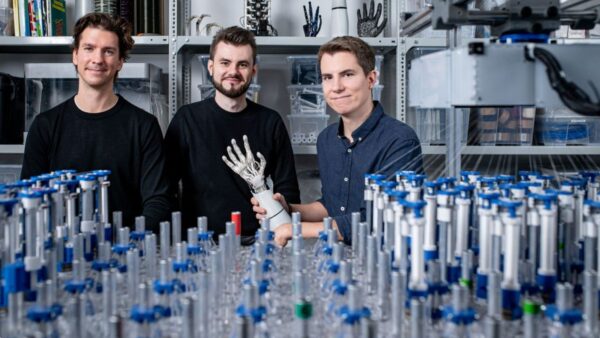
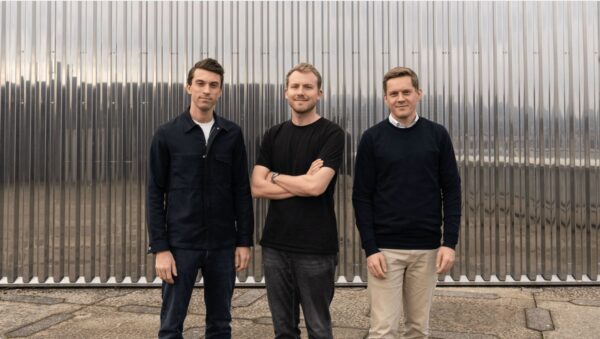
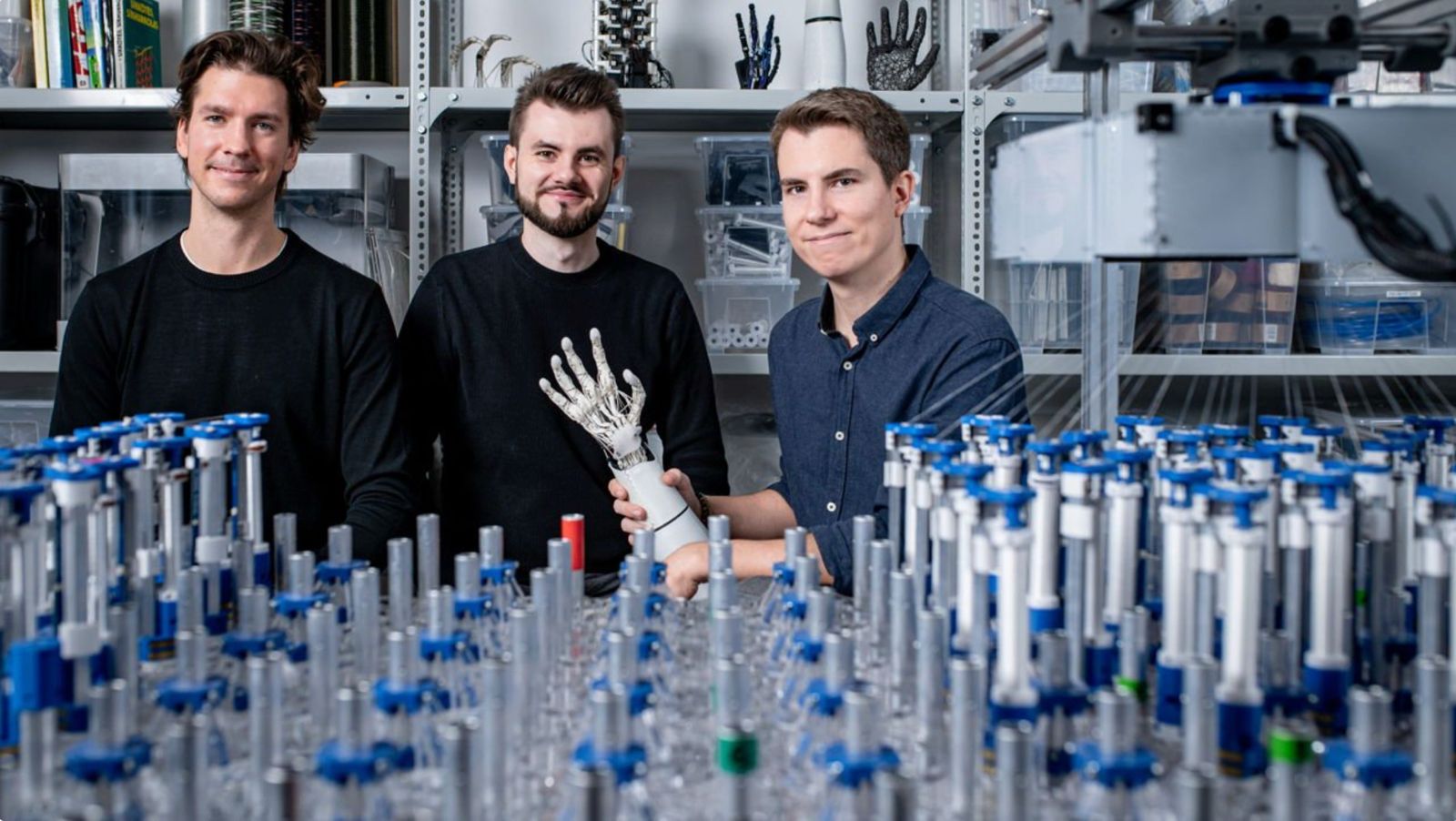
The appointment of Benedek Tasi as CEO, alongside co-founders Dávid Pelyva (CTO) and David Holló (CPO), marks the formalization of a leadership team intent on solving the “hardware bottleneck.” While the software industry has achieved lightning-fast iteration cycles, the physical construction of robots has remained tethered to archaic, manual assembly processes involving thousands of discrete bearings, screws, and cables.
Allonic’s solution is a proprietary manufacturing process known as 3D Tissue Braiding. Inspired by biological musculoskeletal systems, the technology replaces rigid, piecemeal assembly with fully automated, continuous weaving. By braiding high-strength fibers and soft “tissues” directly over a skeletal core, Allonic produces monolithic, compliant robotic bodies in minutes rather than weeks.
The Founder’s Vision
Commenting on the strategic mandate following the round, Benedek Tasi, Co-founder and CEO of Allonic, emphasized that the next frontier of robotics is material, not just digital:
“A lot of attention is on intelligence and software, but hardware still holds many of the hardest problems. The trade-offs between durability and softness, dexterity and strength have always been dictated by the limits of manufacturing. We are removing those constraints and building a platform that allows robotics teams to design, build and iterate freely, without hardware cost or complexity holding them back. Being able to go from idea to physical robot in minutes instead of weeks fundamentally changes how we can think about robotics design.”
Editor’s View
The significance of Allonic’s $7.2M raise transcends its record-breaking status in Hungary; it represents a critical vote of confidence in the “hardware-as-infrastructure” model. By securing backers from OpenAI and Hugging Face—the titans of the software-centric AI revolution—the leadership of Benedek Tasi has effectively bridged the gap between artificial brains and functional bodies. This leadership change signals that the next phase of the humanoid robotics race will not be won by the smartest algorithm, but by the most scalable and resilient physical architecture. Allonic is positioning itself as the “Intel” or “TSMC” for robot bodies, providing the essential infrastructure that allows big tech players to deploy their intelligence into the physical world at scale.
Strategically, the move toward 3D Tissue Braiding allows Allonic to bypass the fragility of traditional mechanical joints, creating a new category of “compliant” robotics that are inherently safer for human interaction. As US big tech firms and consumer electronics giants show increasing inbound interest, Allonic’s trajectory points toward a future where robotic limbs are “grown” in automated factories rather than assembled on manual benches. With this funding, the company is poised to scale its engineering headcount and accelerate industrial pilots, transforming Hungary from a regional tech hub into a global nerve center for the robotics hardware renaissance.
If you need further assistance or have any corrections, please reach out to editor@thetimesmag.com.