
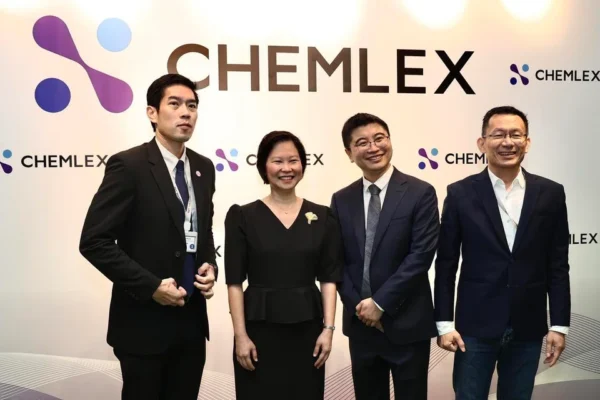

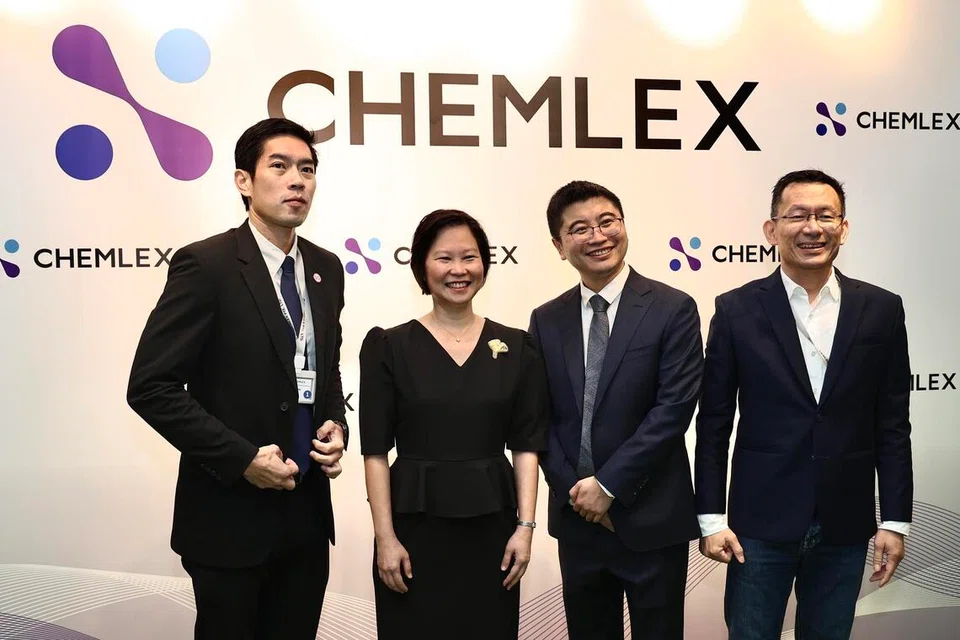
AI-for-science pioneer ChemLex has raised USD 45 million and selected Singapore as the site of its global headquarters and self-driving laboratory, marking a decisive expansion for the fast-growing deep-tech company reshaping chemical and pharmaceutical R&D.
Founded in 2022, ChemLex develops autonomous, AI-powered chemistry systems designed to compress months of molecule discovery into weeks or even days. The company now serves more than 70 customers worldwide — including six of the world’s top ten pharmaceutical companies — reflecting a broader industry shift as the AI-driven drug discovery market is projected to surge tenfold over the next decade.
The latest round was led by Granite Asia, providing capital for the company to scale engineering, software and chemistry teams in Singapore to meet a growing pipeline of pharmaceutical and materials science programs.
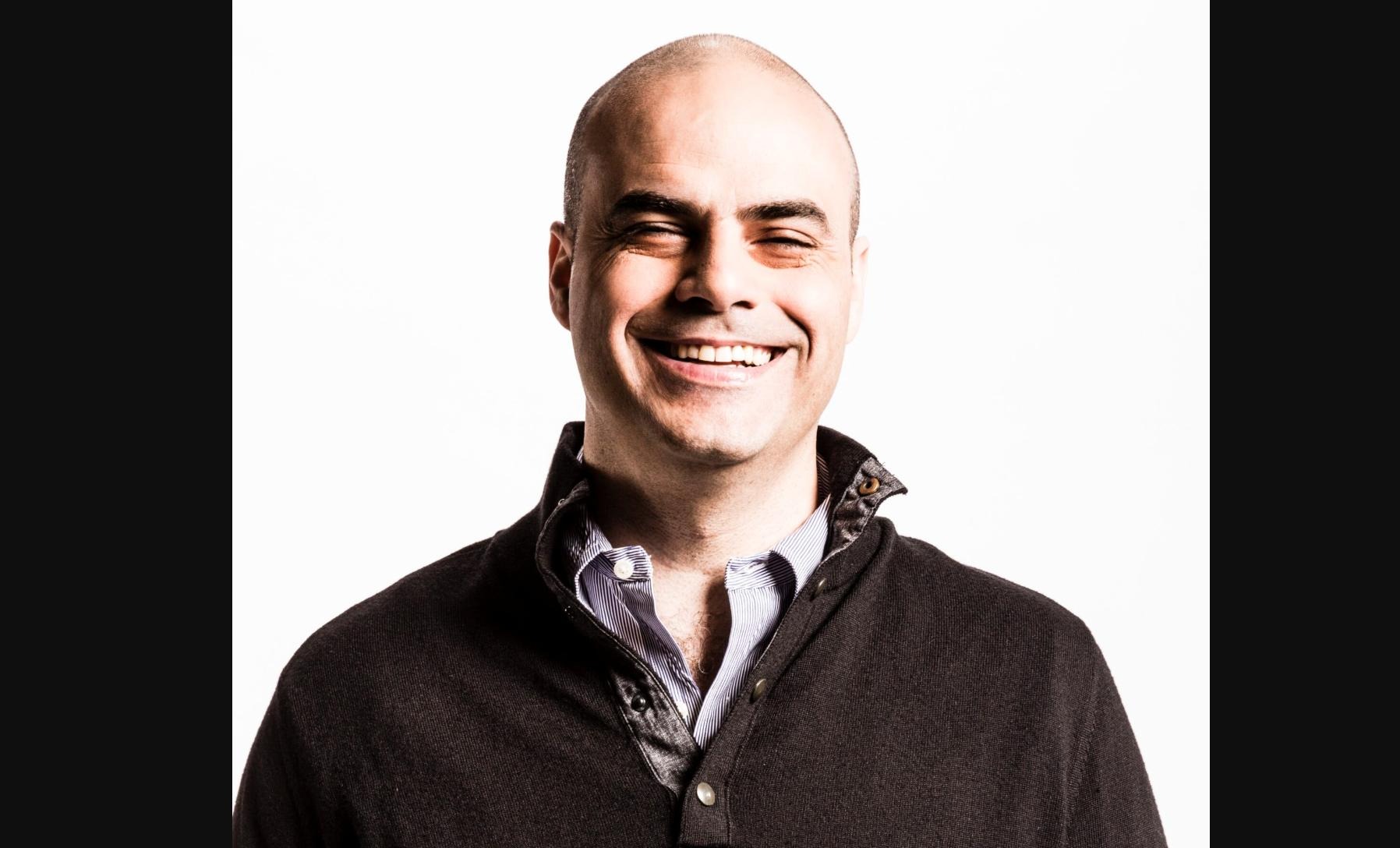
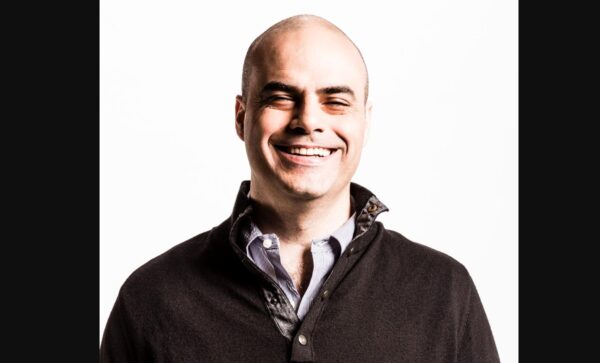
Chief Executive and Founder Sean Lin said the company’s mission is to build an “R&D engine that transforms discovery speed and certainty,” adding that Singapore’s ecosystem provides the foundation for ChemLex to support global partners who “need this capability now.”
Autonomous Chemistry at the Core
At the center of ChemLex’s platform is a fully autonomous, 24/7 synthesis line that runs experiments, captures real-time data and dramatically scales throughput. The model replaces traditional manual workflows with continuous, automated experimentation — increasing precision, lowering waste and driving significant cost efficiency.
The company says this approach shifts chemical discovery from a stop-start process into a high-velocity production pipeline, allowing customers to accelerate candidate validation and reduce development times.
Investor and Institutional Confidence
“AI-enabled chemistry is creating one of the most important industrial transitions of the decade,” said Yinghui Kuang, Partner at Granite Asia. She added that ChemLex sits at a “sweet spot” where AI, automation and scalable manufacturing converge, positioning it to reshape supply chains and unlock new forms of economic and scientific value.
As part of its global expansion, ChemLex signed a memorandum of understanding with Singapore’s Experimental Drug Development Centre (EDDC) to accelerate discovery workflows for next-generation small-molecule therapeutics.
Prof. Damian O’Connell of EDDC highlighted the company’s evolution from a promising startup in 2023 to a “global innovator in AI and automation-driven chemical synthesis,” noting the collaboration aims to shorten timelines, reduce costs and bring safer treatments to patients faster.
The initiative aligns with Singapore’s national ambition to strengthen its life sciences leadership. Goh Wan Yee, Senior Vice President at the Singapore Economic Development Board, said ChemLex’s decision to anchor its global R&D hub locally demonstrates how deep-tech and biomedical strengths can accelerate breakthrough innovation.
Editorial Perspective: Why ChemLex’s Model Points to a New R&D Era
The rise of ChemLex underscores a fundamental shift in how science is conducted: from labor-intensive experimentation to digitally driven, autonomous discovery. At a time when pharmaceutical pipelines face mounting cost pressures and longer development cycles, the company’s self-driving lab approach offers a blueprint for faster, cleaner and dramatically more economical innovation.
What sets ChemLex apart is not just automation, but the integration of AI, continuous synthesis and real-time data generation into a unified workflow. That fusion allows scientific teams — from drug discovery to materials science — to operate at a scale and speed that traditional labs cannot match.
Singapore, with its strong policy support, advanced talent base and growing biotech ecosystem, appears to be a strategic fit. By placing its global headquarters there, ChemLex has positioned itself at the crossroads of Asian manufacturing, global R&D demand and forward-leaning regulatory infrastructure. This combination gives the company a unique runway to influence the future of scientific development, not just in Asia but worldwide.
If ChemLex sustains its momentum, it could become one of the defining deep-tech companies of this decade — one that materially shifts how molecules, medicines and materials are discovered.
If you need further assistance or have any corrections, please reach out to editor@thetimesmag.com.