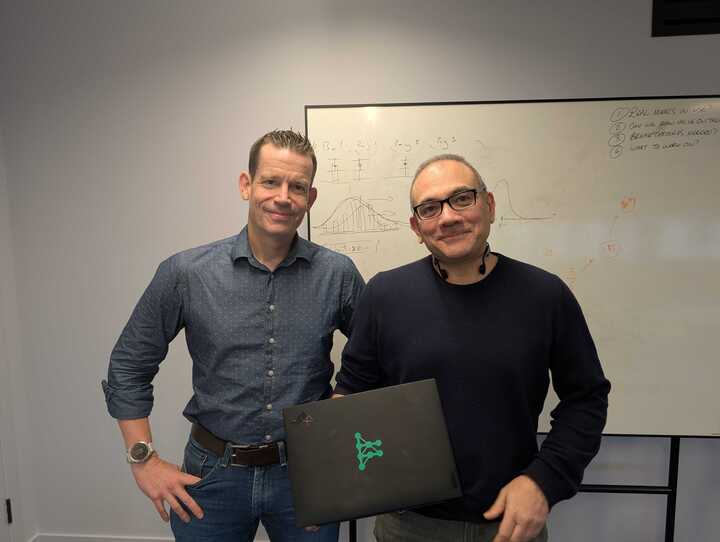





Govstream.ai, a promising Seattle-based technology firm focused on transforming governmental workflows, has announced the successful closure of a $3.6 million seed funding round. The capital infusion is earmarked to accelerate the development and deployment of its AI-native permitting tools, which aim to dramatically reduce city permitting timelines from months to mere weeks, and eventually, days.
The oversubscribed funding round was spearheaded by 47th Street Partners, a venture capital firm based in Menlo Park. Significant participation also came from returning pre-seed investor Nellore Capital of Palo Alto, Ascend AI Fund (a Seattle-based AI-focused fund), and a cohort of seasoned veterans in the GovTech sector. Noteworthy individual investors include Kevin Merritt (founder and former CEO of Socrata) and Andreas Huber (co-founder and CEO of First Due).
The fresh capital will primarily fuel the expansion of Govstream.ai‘s engineering and AI teams in the Seattle/Bellevue region. The mission is to finalize a cohesive, conversational “language” for permitting. This proprietary system integrates chat, email, voice, architectural plans, and existing workflows, effectively addressing the systemic bottlenecks that frustrate both city staff and developers.
“Cities are under intense pressure to add housing, support small businesses, and keep development sustainable, all while working inside permitting systems that were never really rethought for this moment,” stated Saf Rabah, founder and CEO of Govstream.ai. “We’re using AI to bring back what digitization lost: being able to ask someone who can actually help, paired with a system that quietly reads the codes, emails, and plan sets in the background so staff get real decision support instead of spending hours hunting through documents.”
Govstream.ai is moving beyond the legacy systems—which primarily function as application trackers—by introducing an intelligent layer atop existing infrastructure. This layer is designed to validate documents, pre-check applications for compliance, and provide staff with context-aware decision support, enabling them to focus their expertise on complex, high-value cases.
Rabah emphasized the scope of the modernization: “Permitting has been digitized in pieces but not truly modernized end to end. Our goal is to give permit techs, planners, and reviewers an intelligent layer on top of the systems they already use, one that can reason over hundreds of pages of plans and regulations and surface the few things that really matter. That’s how cities move more homes and critical infrastructure from ‘submitted’ to ‘approved’ without burning people out on either side of the counter.”
The platform is already in production use with the City of Bellevue, Washington, and is expanding into deployment with more U.S. jurisdictions. By treating permitting as a critical and solvable component of the urban housing crisis, Govstream.ai is enabling local governments to adopt transparent, accountable AI in line with their civic values, thereby restoring capacity and trust while unlocking much-needed housing and development.
💡 Editorial View: The Critical Nexus of AI and Urban Efficiency
The successful funding of Govstream.ai marks a significant inflection point in the broader GovTech landscape. While many cities and counties have struggled to implement transformative digital initiatives, this Seattle-based startup is targeting perhaps the most painful bottleneck in urban development: the permitting process. The company’s approach—building an intelligent, conversational layer on top of existing, often siloed, municipal software—is a pragmatic path to modernization. Instead of requiring cities to undertake costly, multi-year “rip and replace” projects for core systems, Govstream.ai leverages the data cities already possess, creating an immediate and measurable return on investment through efficiency gains.
The underlying potential of Govstream.ai extends beyond mere automation. By creating products like Application Assistant and First Review, the company is systematically reducing friction and ensuring clarity at both the front and back end of the process. This is not just a technology upgrade; it is a vital step toward restoring public confidence in civic capacity. When builders and residents receive quicker, more consistent, and data-backed responses, the entire development ecosystem accelerates. As housing affordability crises grip major metropolitan areas, removing administrative red tape through intelligent software becomes not just an option but a civic imperative, positioning Govstream.ai at the vanguard of responsible, impact-driven GovTech.
If you need further assistance or have any corrections, please reach out to editor@thetimesmag.com.